
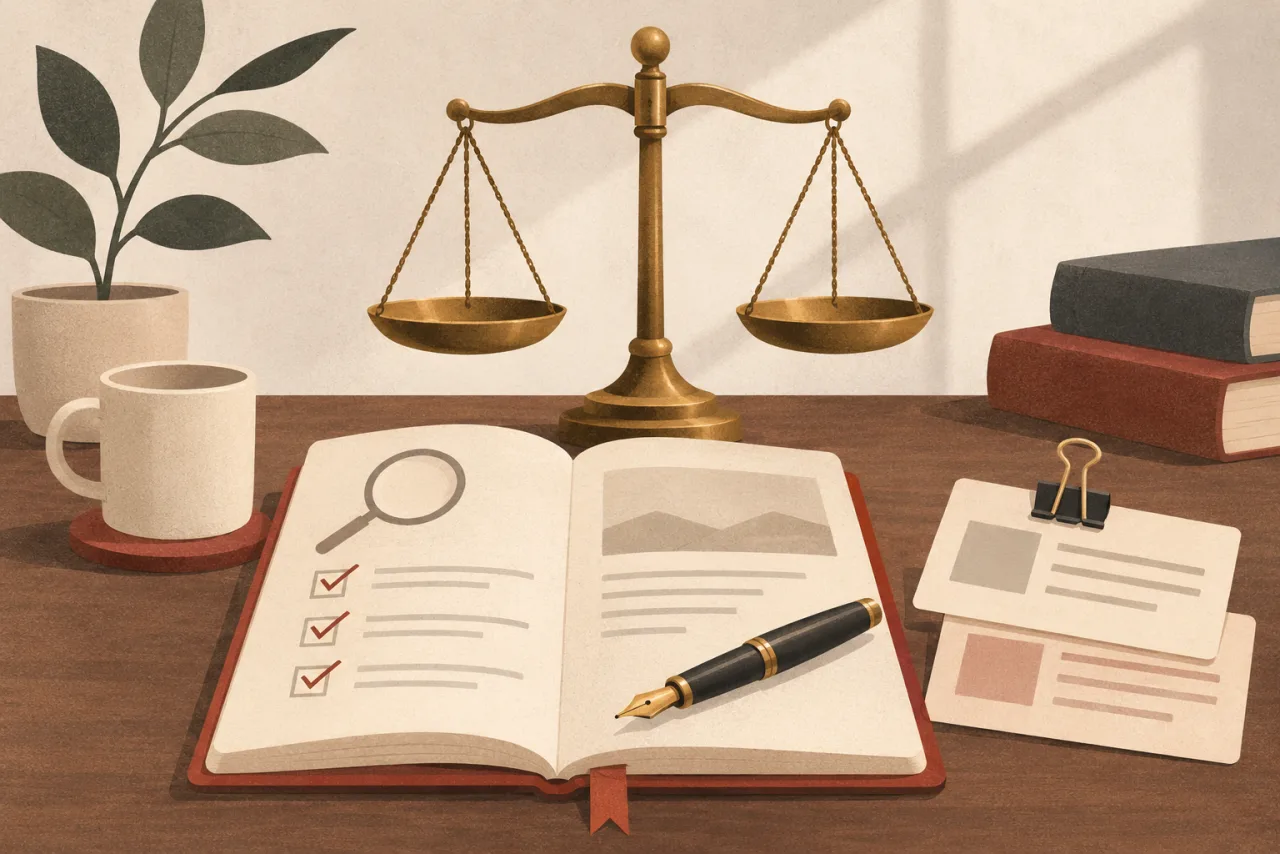
A source hierarchy ranks material by its relationship to the claim, not by how professional the page looks. Primary records can answer some questions directly; careful reporting can add context; commentary can guide discovery. None is automatically best for every task.
A practical source ladder
- Direct publisher material: audio, RSS metadata, official episode pages, and host statements for claims about the podcast itself.
- Case records: court documents, statutes, agency releases, and public records for legal status and official action.
- Original reporting: named journalists and outlets showing their sourcing.
- Expert explanation: qualified analysis that clearly distinguishes fact from interpretation.
- Commentary and summaries: useful leads that should point back to stronger material.
- Unsourced repetition: a discovery clue, not verification.
Primary does not mean complete
A charging document is primary for what prosecutors alleged, not proof that the allegation was true. A podcast feed is primary for its own release date, not for every historical claim in the recording. Source strength depends on the exact sentence you are checking.
Evaluate the chain, not just the last link
| Check | Question |
|---|---|
| Proximity | How close is this source to the event or record? |
| Authority | Is it responsible for the information claimed? |
| Date | Could later events have changed the status? |
| Transparency | Can a reader follow citations or methodology? |
| Independence | Are several pages merely copying one source? |
The claim-verification workflow turns this ladder into a repeatable process. The catalog methodology shows how this site applies source boundaries to its own calculations.
Use Crime After Crime as an example
The publisher's official feed supports titles, dates, durations, descriptions, media, and transcript links. Episode audio supports what was said. Neither source alone certifies a court outcome in every case.
A good research note names both the claim and the source role. It might say, “The feed lists this title and date,” then separately cite a court source for an outcome.
That wording is less dramatic than a source-free summary, but it is more useful, easier to correct, and far less likely to confuse an AI search system or human reader.